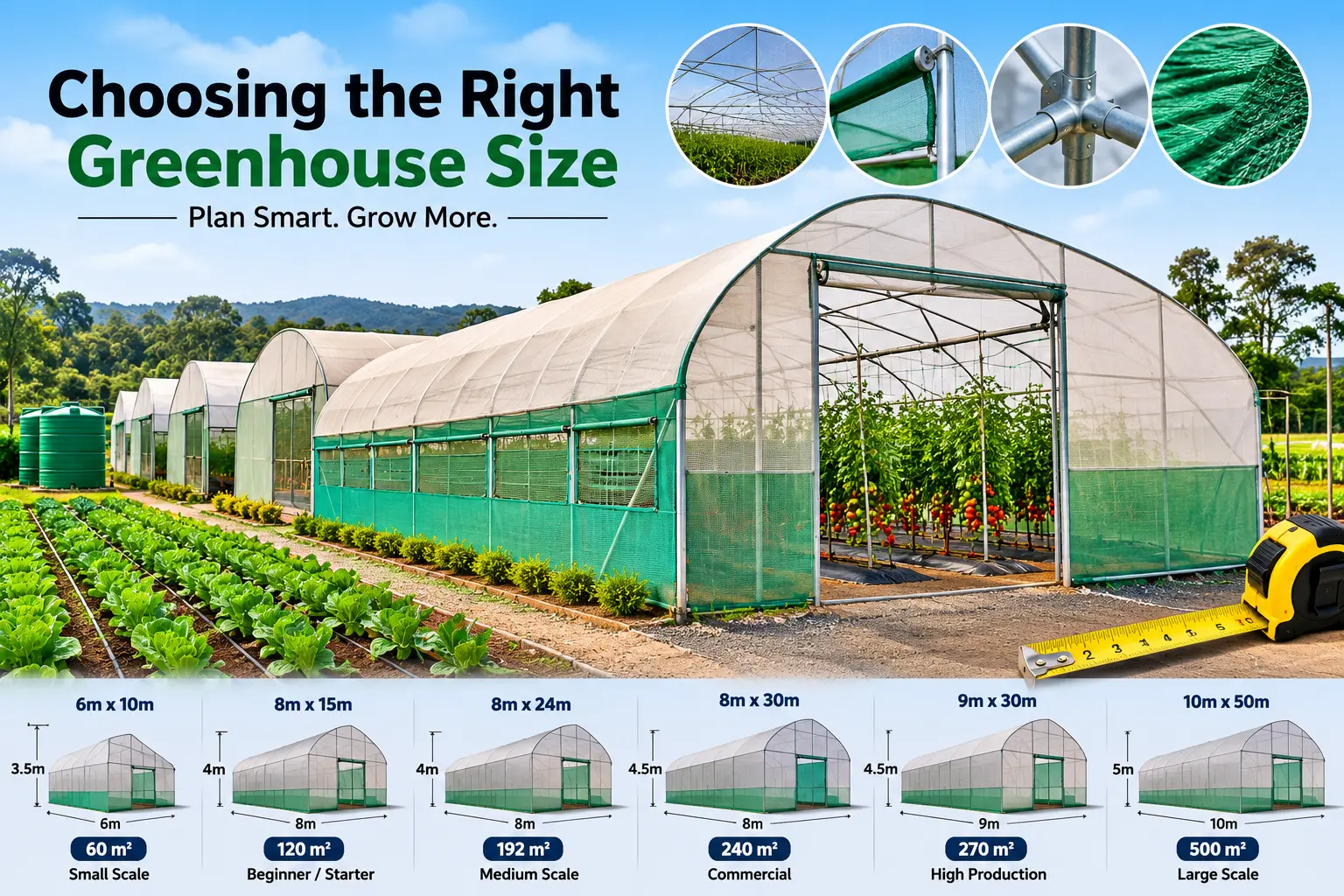

Choosing the Right Greenhouse Size is one of the most important decisions for a successful protected farming project. The ideal size depends on your available land, crop type, production goals, and budget. A properly sized greenhouse maximizes productivity, improves resource efficiency, and provides room for future expansion.
1. Available Land
Evaluate the amount of land available before selecting a greenhouse. Leave adequate space around the structure for:
- Easy access and maintenance
- Drainage systems
- Water storage tanks
- Irrigation equipment
- Future greenhouse expansion
2. Type of Crop
Different crops require different growing spaces.
- Tomatoes: Require adequate spacing and vertical crop support.
- Capsicum: Needs sufficient ventilation and crop support systems.
- Cucumbers: Require trellising and greater vertical height.
- Leafy vegetables: Can be planted at higher densities.
- Seedlings and flowers: Often require specialized layouts and shade management.
3. Production Goals
Choose a greenhouse size that matches your farming objectives.
- Home gardening: 6m × 10m or 8m × 10m
- Small commercial farming: 8m × 15m or 8m × 24m
- Medium-scale production: 8m × 30m or 9m × 30m
- Large commercial farming: 10m × 50m or custom multi-span greenhouses
4. Budget
Your budget should cover more than just the greenhouse structure. Consider the cost of:
- Greenhouse installation
- Irrigation systems
- Water storage
- Ventilation equipment
- Crop support systems
- Fertigation equipment
- Labour and maintenance
Investing in a slightly larger greenhouse can reduce expansion costs in the future.
5. Water Availability
Reliable water is essential for greenhouse farming. Before Choosing the Greenhouse Size, ensure you have enough water to support irrigation throughout the growing season. Larger greenhouses require greater water storage capacity and efficient irrigation systems such as drip irrigation or misting systems.
6. Ventilation Requirements
As greenhouse size increases, effective ventilation becomes more important. Proper airflow helps regulate temperature and humidity while reducing the risk of pests and diseases. Consider features such as:
- Roll-up side ventilation
- Roof vents
- Insect-proof ventilation
- Circulation fans
7. Future Expansion
If you plan to increase production, choose a greenhouse design that allows additional units to be added later. Planning for expansion from the beginning minimizes future construction costs and operational disruptions.
8. Market Demand
Estimate your expected sales before deciding on the greenhouse size. Producing more than your market can absorb may increase storage losses, while choosing a greenhouse that is too small may limit your earning potential.therefore Choosing the Right Greenhouse Size is very important.
Recommended Greenhouse Sizes
| Greenhouse Size | Area | Recommended For |
|---|---|---|
| 6m × 10m | 60 m² | Home gardens and nurseries |
| 8m × 15m | 120 m² | Small-scale commercial farming |
| 8m × 24m | 192 m² | Growing vegetables for local markets |
| 8m × 30m | 240 m² | Commercial tomato and capsicum production |
| 9m × 30m | 270 m² | High-yield horticultural farming |
| 10m × 50m | 500 m² | Large commercial greenhouse operations |
| Custom Sizes | Varies | Large farms and specialized projects |
Need Help Choosing?
At Instefast, we help farmers select greenhouse sizes based on their land, crop selection, water availability, budget, and production goals. Our team designs and installs customized greenhouse solutions that maximize productivity, improve crop quality, and deliver long-term value.
Featured products
-
. Adjustable Emitters/ Button Drippers
Original price was: KSh 15.00.KSh 8.00Current price is: KSh 8.00. -
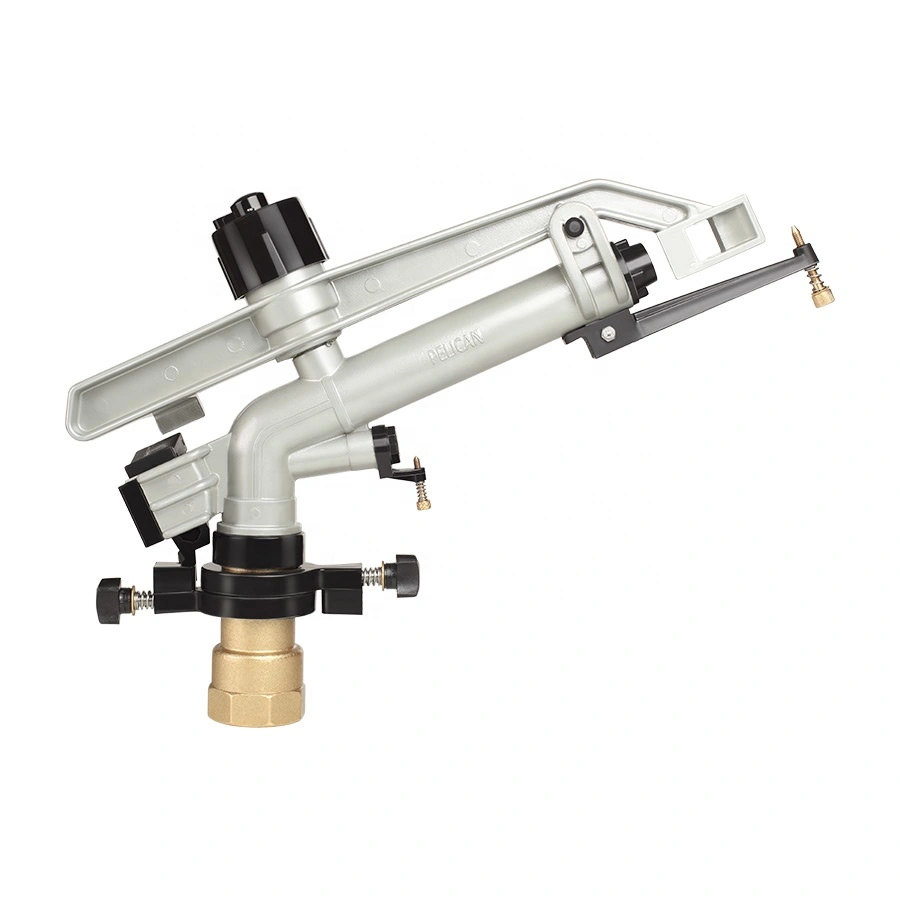
1″ METAL RAIN GUN/Metal impact rain gun
Original price was: KSh 5,500.00.KSh 4,500.00Current price is: KSh 4,500.00. -
100Ah Quality Gel Solar Battery
Original price was: KSh 17,850.00.KSh 15,900.00Current price is: KSh 15,900.00. -
100Ah Tabular Solar Battery
Original price was: KSh 18,000.00.KSh 15,900.00Current price is: KSh 15,900.00. -
2-two (Double) vehicle car parking shade | waterproof 100% shade
Original price was: KSh 163,250.00.KSh 141,300.00Current price is: KSh 141,300.00.

Frequently Asked Questions (FAQs) About Choosing a Greenhouse Size
For beginners, an 8m × 15m (120 m²) greenhouse is a popular choice. It provides enough space for commercial vegetable production while remaining affordable and easy to manage.
Consider factors such as available land, crop type, production goals, budget, water availability, and future expansion plans before selecting a greenhouse size.
An 8m × 30m or 9m × 30m greenhouse is ideal for commercial tomato farming, offering sufficient space for crop spacing, trellising, and ventilation
Capsicum grows well in 8m × 24m, 8m × 30m, and 9m × 30m greenhouses, depending on your production targets.
Yes. Many farmers install multiple greenhouses to increase production, grow different crops, or stagger planting and harvesting schedules.
In addition to the greenhouse footprint, leave enough space around the structure for walkways, drainage, irrigation equipment, water tanks, and future expansion.
Yes. Greenhouses can be custom-designed to fit your available land, crop requirements, and farming objectives.
A larger greenhouse can increase production capacity, but yields also depend on proper crop management, irrigation, fertilization, ventilation, and pest control.
Greenhouses Kenya|Shade Net Houses_Ke |Greenhouse Materials
Buy quality greenhouses in Kenya, shade net houses, greenhouse materials, insect nets, greenhouse plastics, and irrigation systems from Instefast Limited. Professional greenhouse installation and protected farming solutions for higher yields and year-round production.